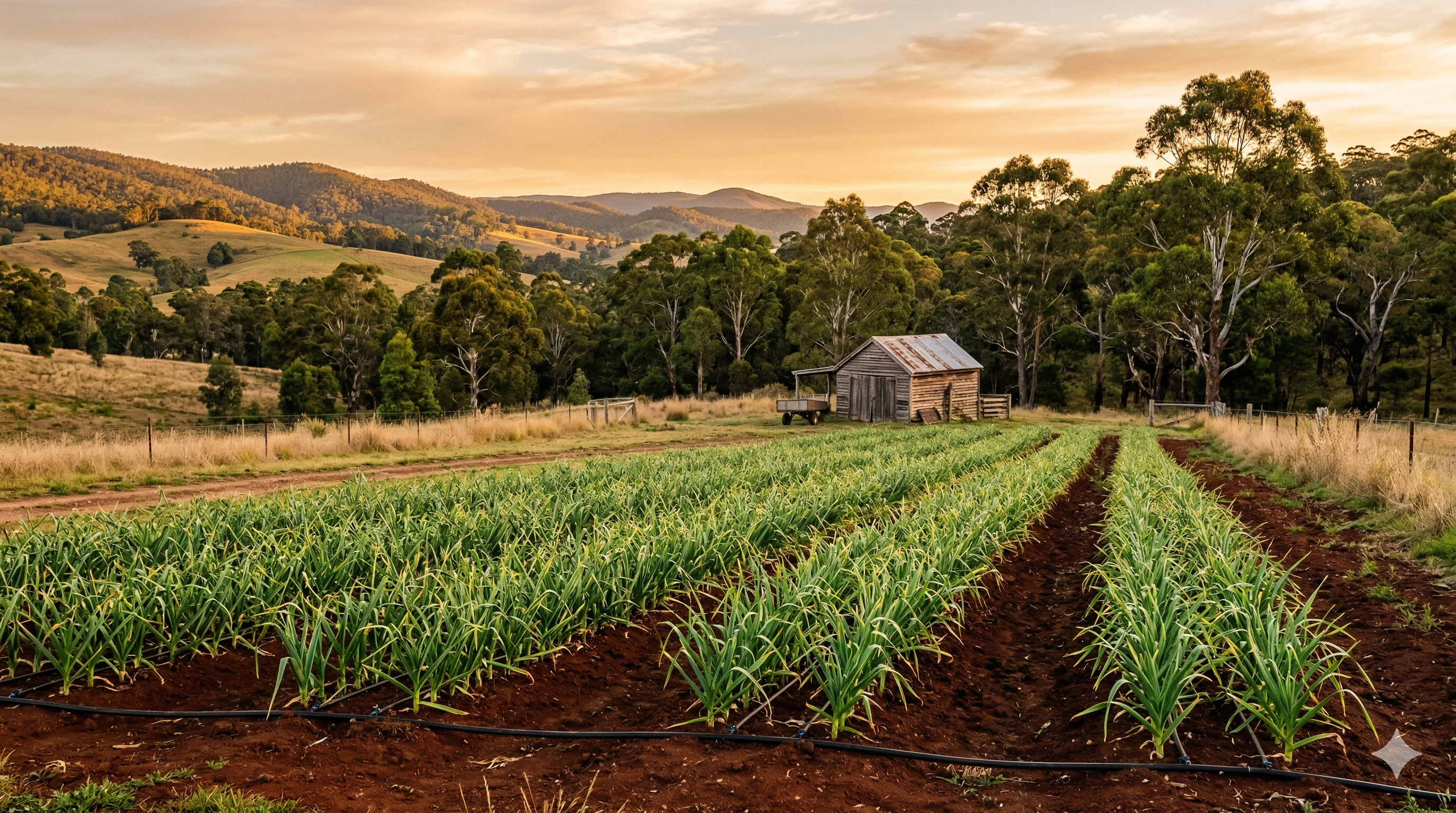
From Soil to Shed: A Year on the Garlic Farm
People often ask us what we do all year. After all, garlic is a single crop — how busy can it be? The answer is: busier than you'd think. Garlic has its own rhythms, and each season brings a different kind of work.
Here's what a year looks like at Indigo Garlic.
Autumn (March to May): Planting Season
This is when it all begins. In late March, we start breaking apart our best seed bulbs — the ones we set aside from last year's harvest — into individual cloves. Every clove is inspected by hand. Anything with soft spots, mould, or damage goes into the compost.
By mid-April, we're planting. Each clove goes pointy-end-up into beds that were prepared with compost and aged manure over summer. Spacing matters — 15cm between cloves, 30cm between rows. Too close and the bulbs compete. Too far and we waste bed space.
We plant around 8,000 cloves across our beds. Every single one goes in by hand. It takes about two weeks of solid work.
After planting, we mulch heavily with pea straw. This suppresses weeds, retains moisture, and keeps the soil temperature stable through winter. Then we wait.
Winter (June to August): The Quiet Months
This is when garlic does its most important work, invisibly. Below the mulch, roots are establishing and the clove is beginning to differentiate — slowly splitting into the multiple cloves that will form next year's bulb.
The cold is essential. Our garlic needs those long weeks below 10 degrees to trigger proper bulb formation. It's the one time of year where we genuinely can't hurry the process.
We use winter to maintain equipment, plan next year's bed rotations, and manage our cover crop areas. We also top-dress the garlic beds with a light compost tea in July to give the soil biology a boost before the spring growth surge.
Spring (September to November): Growth and Scapes
When the soil warms in September, the garlic wakes up. Green shoots push through the mulch almost overnight, and from there the growth is rapid. By October, the plants are 40-50cm tall with thick, strappy leaves.
In November, the hardneck varieties send up their scapes — those curly green stalks we mentioned. We snap these off by hand to redirect the plant's energy into the bulb. It's one of those satisfying, meditative farm tasks. Plus, we get to eat the scapes, which are delicious.
Late spring is also when we're most vigilant about pests and disease. Rust (a fungal disease) is the main threat. We manage it through good airflow, crop rotation, and removing any affected leaves immediately. No sprays. No fungicides.
Summer (December to February): Harvest and Curing
December is harvest month, and it's the most exciting — and exhausting — time of year.
We watch the leaves carefully. When the bottom four or five have turned brown but the top leaves are still green, the garlic is ready. Pull too early and the bulbs are undersized. Too late and the wrappers split, reducing storage life.
Every bulb is lifted by hand with a garden fork. We brush off the loose soil, bundle the plants in bunches of ten, and hang them in our curing shed. The shed is dry, dark, and well-ventilated — perfect conditions for the garlic to cure.
Curing takes three weeks minimum. During this time, moisture evaporates from the outer wrappers, the neck seals shut, and the flavour concentrates. Properly cured garlic stores for months. Rush this step and you get soft, short-lived bulbs.
In late January, we trim the roots, cut the stalks, clean each bulb by hand, and grade them for sale. The best bulbs become our seed stock for next year's planting. The rest go to you.
The Cycle Continues
By February, we're already thinking about next year — testing soil, planning rotations, ordering cover crop seed. The garlic calendar doesn't really have an off-season. It just has quieter months.
That's what we love about this work. It's slow, it's seasonal, and it's deeply connected to the land. Every bulb we sell carries a full year of care in its skin.